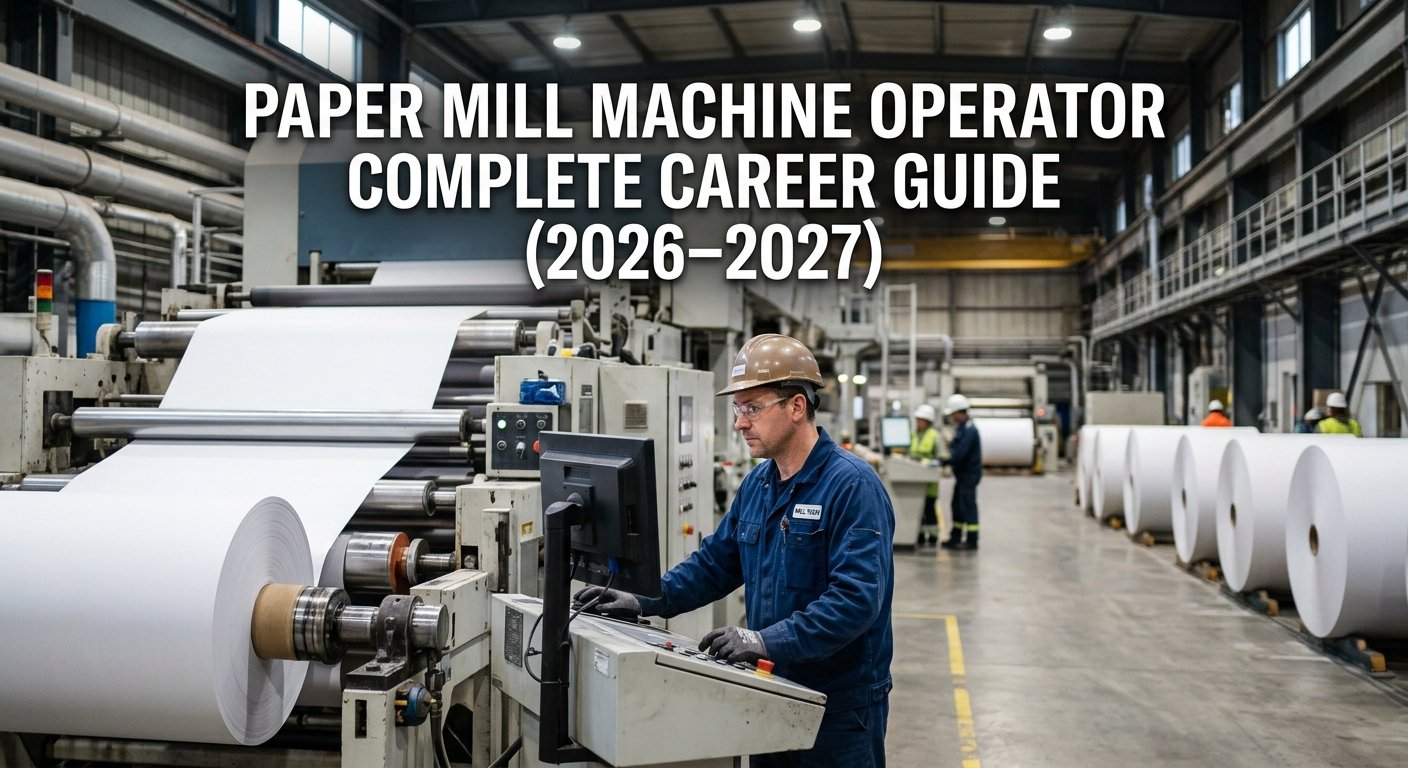
The papermaking industry is undergoing a massive transformation. Driven by global sustainability shifts, reduced single-use plastics, and high demand for eco-friendly packaging, paper mills across North America and globally are modernizing at a rapid pace. At the center of this industrial evolution is the Paper Mill Machine Operator.
If you are looking for a high-paying, stable career in skilled manufacturing, operating heavy industrial paper machinery offers competitive wages, career growth, and long-term job security.
What Does a Paper Mill Machine Operator Do?
A Paper Mill Machine Operator oversees, controls, and maintains complex machinery used to produce paper products, cardboard, pulp, and specialized paper stock. Operatives manage automated computer controls (DCS) while inspecting mechanical components on the floor to ensure production targets, quality standards, and safety compliance are met.
Core Duties & Responsibilities
- Machine Setups & Calibration: Adjust machine speeds, tension, moisture levels, and chemical additives according to product specifications.
- System Monitoring: Track key parameters using automated control panels to ensure smooth pulp flow, drying, and winding.
- Quality Control: Collect and test paper samples for thickness, weight, strength, and moisture content.
- Troubleshooting & Maintenance: Identify operational jams, replace worn parts (like wire screens or felt belts), and perform routine preventive maintenance.
- Safety & Compliance: Adhere strictly to OSHA standards, wear personal protective equipment (PPE), and maintain continuous lock-out/tag-out safety protocols.
Key Industry Trends Shaping 2026–2027
Operating paper mill machinery in 2026 requires more tech-savviness than in past decades. Understanding these emerging trends gives job candidates a distinct advantage:
- Smart Manufacturing & Automation: Modern paper mills utilize AI-driven predictive maintenance and IoT sensors to monitor machine health in real time, requiring operators to interact regularly with digital dashboards.
- Sustainability Focus: Mills rely heavily on recycled fiber pulping, reduced water usage, and energy-efficient drying systems to meet zero-waste targets.
- Packaging Demand Surge: While traditional printing paper demand has shifted, e-commerce growth has increased global reliance on corrugated boxes, kraft paper, and biodegradable food packaging.
Salary and Job Outlook (2026–2027)
Industrial paper machine operators earn competitive compensation, with ample opportunities for paid overtime, night shift differentials, and full union benefits.
| Position Level | Average Hourly Wage | Estimated Annual Salary |
| Entry-Level (Assistant / Utility Operator) | $19.00 – $24.00 / hr | $39,000 – $50,000 |
| Mid-Level (Machine Operator) | $25.00 – $32.00 / hr | $52,000 – $66,000 |
| Senior / Master Operator (Lead Supervisor) | $33.00 – $42.00+ / hr | $68,000 – $87,000+ |
Note: Wages vary depending on geographic location, union affiliation, shift schedules, and specialized mill certifications.
How to Become a Paper Mill Operator
Entering the industry is straightforward, making it an ideal choice for job seekers without a four-year college degree.
1. Requirements & Qualifications
- High School Diploma or GED (required).
- Basic proficiency in mechanical concepts and mathematics.
- Ability to lift heavy objects (up to 50 lbs) and work standing for long periods.
- Willingness to work 12-hour rotating shifts (days, nights, weekends).
2. Beneficial Skills & Certifications
- Mechanical Aptitude: Experience with hand tools, pumps, hydraulics, or pneumatic systems.
- Pulp & Paper Technology Certificates: Short certifications offered through community colleges or industry associations like TAPPI (Technical Association of the Pulp and Paper Industry).
- Forklift & Crane Certification: Frequently useful during loading and material moving operations.
Career Path & Advancement Opportunities
Starting as an entry-level hand or utility helper, a motivated paper mill worker can advance rapidly along a structured career path:
- Utility / Reel Assistant: Handles raw material feeding, basic cleanup, and roll removal.
- Dry End / Wet End Operator: Manages specific segments of the papermaking process (forming or drying).
- Head Machine Operator: Oversees the entire line from pulp preparation to final spooling.
- Shift Supervisor / Mill Superintendent: Manages entire crew operations, production planning, and plant safety.
Frequently Asked Questions (FAQ)
Is working in a paper mill hard physical work?
Modern mills rely heavily on automation, reducing extreme physical labor. However, operators still work on their feet, perform physical maintenance, and monitor high-heat, high-noise production lines.
Do paper mills offer shift work?
Yes. Most manufacturing paper mills operate 24/7/365, utilizing rotating shifts (such as DuPont 12-hour schedules), which often allow for multi-day breaks between shifts.
Start Your Career in Papermaking Today
Are you ready to build a reliable career in modern industrial manufacturing? Explore open roles, competitive pay packages, and immediate openings in your area.