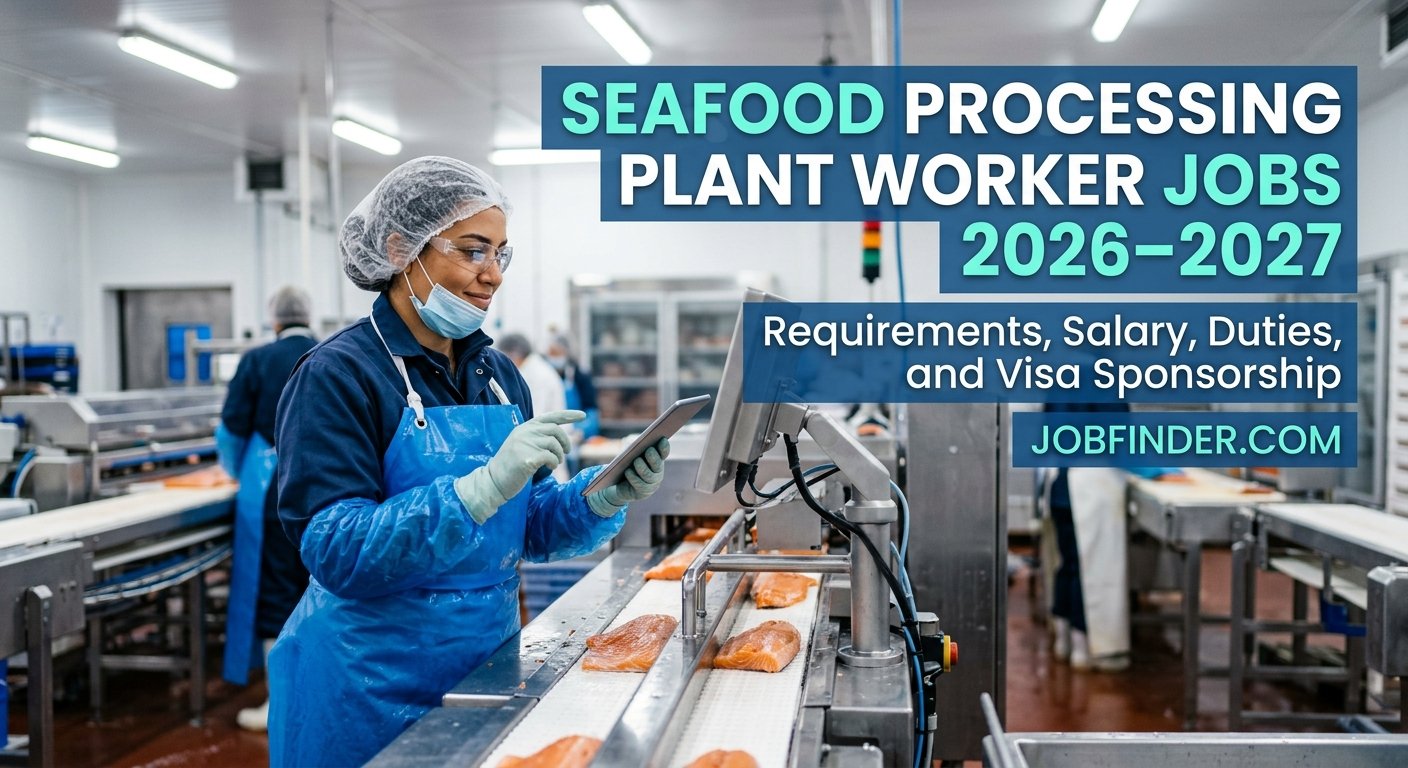
The demand for Seafood Processing Plant Workers in key coastal regions across the United States, Canada, Australia, and Europe is reaching record levels for the 2026–2027 hiring season. Seafood factories and ocean-going vessels require thousands of dedicated workers each year to harvest, clean, package, and distribute fresh and frozen seafood products.
Whether you are looking for local entry-level production work or seasonal employment with visa sponsorship (such as the H-2B visa program in the U.S.), this career path offers steady pay, overtime opportunities, and clear entry points without requiring prior formal higher education.
Key Duties and Responsibilities of a Seafood Processing Worker
Working in a seafood plant requires speed, manual dexterity, and strict adherence to food safety standards. Daily tasks typically include:
- Sorting and Grading: Inspecting fish, crab, shrimp, and shellfish by size, weight, and overall quality.
- Cutting and Filleting: Washing, descaling, gutting, deheading, and expertly filleting fish using specialised knives and equipment.
- Shucking and Processing: Opening oyster shells, picking crab meat, or disjointing lobsters for packaging.
- Packaging and Weighing: Packing fresh or frozen seafood blocks into sealed containers, cartons, or vacuum bags with precise weight labels.
- Plant Hygiene & HACCP Compliance: Maintaining pristine sanitary conditions across workstations, conveyors, and machinery to comply with safety regulations.
Salary Expectations for 2026–2027
Earnings in the seafood processing sector vary based on geographic location, seasonal overtime, and whether the job is shore-based or at-sea.
| Location / Job Type | Average Hourly / Monthly Wage Range | Key Features |
| U.S. Onshore Plants | $16.00 – $23.50 / hour | Hourly wages, overtime opportunities, H-2B seasonal roles |
| At-Sea Factory Vessels (Alaska/Pacific) | $3,600 – $12,000 / month | High earning potential, rotating schedules, room and board included |
| Canadian Processing Facilities | $18.50 – $26.00 / hour | Entry-level to experienced filleter rates, benefits packages |
Job Requirements and Qualifications
Most entry-level seafood processing roles do not require formal degrees or years of previous experience. However, employers look for candidates who meet the following physical and operational criteria:
- Physical Stamina: Ability to stand for long shifts (8 to 12+ hours) in temperature-controlled, damp, or cold environments.
- Manual Dexterity: Comfort working rapidly with hands, knives, and packaging machinery.
- Food Safety Awareness: Willingness to learn and follow strict hygiene protocols (HACCP standards).
- Teamwork & Reliability: Ability to work efficiently in fast-paced line settings under deadline pressure.
Visa Sponsorship Opportunities (2026–2027)
Many seafood companies face local labor shortages during peak harvesting seasons, leading them to recruit international workers.
- United States (H-2B Visa Program): Temporary, non-agricultural seasonal visas allowing foreign workers to join seafood operations for 6 to 9-month peak seasons.
- Canada (TFWP – Temporary Foreign Worker Program): Provides work permits for foreign applicants to work in fish processing operations across coastal provinces.
Employers offering sponsorship frequently provide employer-assisted housing, tools, and on-the-job training.
Ready to Start Your Application?