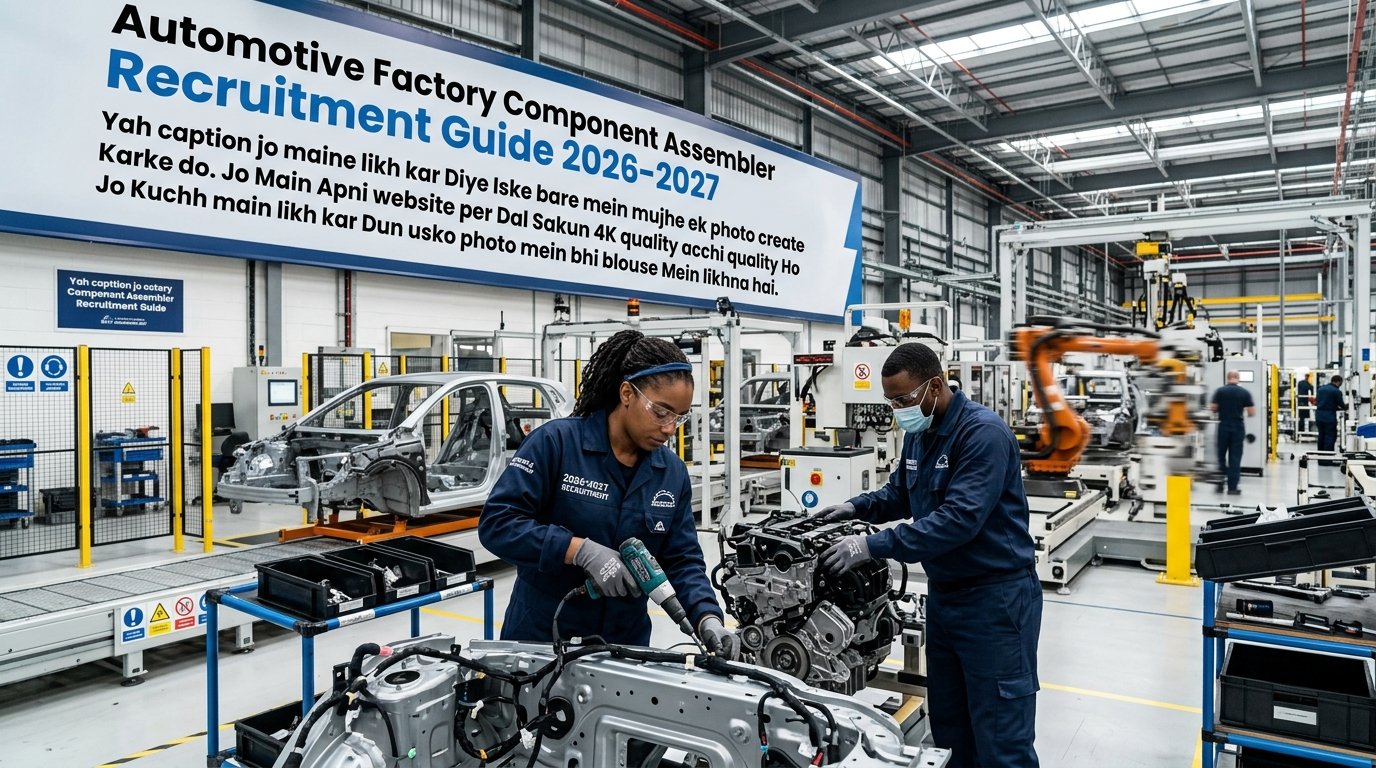
The automotive manufacturing sector is undergoing an unprecedented shift. With the rapid expansion of Electric Vehicles (EVs), hybrid powertrain systems, and advanced driver-assistance systems (ADAS), the demand for skilled Automotive Factory Component Assemblers is at an all-time high heading into 2026 and 2027.
Whether you are seeking an entry-level position in vehicle assembly or looking to advance your career in automated manufacturing, this comprehensive guide covers everything you need to know about job roles, key responsibilities, required skills, salary expectations, and how to apply.
What Does an Automotive Factory Component Assembler Do?
An Automotive Component Assembler is responsible for piecing together individual parts, sub-assemblies, and mechanical or electrical systems to build complete motor vehicles. Working in fast-paced production environments, assemblers ensure that every component—from EV battery modules to interior trim—meets strict engineering specifications and quality standards.
Core Responsibilities:
- Assembly Line Operations: Read and interpret technical blueprints, schematics, and digital work instructions to assemble mechanical, hydraulic, and electrical parts.
- Precision Tool Handling: Utilize pneumatic tools, torque wrenches, automated rivet guns, and electronic measuring devices to secure vehicle components.
- Quality Assurance & Inspection: Conduct dimensional checks, visual inspections, and automated testing to identify defects early in the production cycle.
- Robotics Collaboration: Work alongside modern industrial cobots (collaborative robots) and automated guided vehicles (AGVs) on smart manufacturing floors.
- Safety & Workplace Standards: Follow strict occupational safety protocols, wear personal protective equipment (PPE), and maintain an organized workstation.
Required Qualifications & Key Skills
Modern automotive plants prioritize candidates with strong technical aptitude, attention to detail, and a willingness to learn automated processes.
Education & Certifications
- Minimum Requirement: High School Diploma, GED, or equivalent vocational training.
- Preferred Certifications: Certified Manufacturing Associate (CMfgA), OSHA Safety Certification, or specialized technical diplomas in automotive assembly/robotics.
Key Technical & Soft Skills
- Manual Dexterity & Stamina: High hand-eye coordination and physical capability to stand, lift, and work on assembly lines during full shifts.
- Blueprint & Schematic Reading: Ability to read basic engineering drawings, work orders, and wiring diagrams.
- Tool Proficiency: Experience operating power tools, air drills, calipers, and digital torque tools.
- Adaptability & Teamwork: Ability to communicate clearly within multi-disciplinary teams and adapt to changing shift schedules.
Automotive Assembler Salary & Career Growth (2026–2027)
| Level / Role | Estimated Hourly Rate | Average Annual Salary |
| Entry-Level Assembler | $18.50 – $22.00 / hr | $38,500 – $45,700 |
| Experienced Component Assembler | $22.50 – $28.00 / hr | $46,800 – $58,200 |
| Lead Assembler / Quality Specialist | $28.50 – $35.00+ / hr | $59,000 – $72,800+ |
Note: Compensation varies based on country, region, union coverage, and specialization (e.g., high-voltage EV battery assembly).
Career Advancement Pathways
Working as a factory assembler serves as a solid foundation for multiple lucrative career tracks:
- Quality Assurance (QA) Inspector: Specializing in testing, defect tracking, and regulatory compliance.
- Robotics & Automation Operator: Monitoring, calibrating, and troubleshooting industrial assembly robots.
- Assembly Line Supervisor / Team Lead: Managing shift workflows, safety compliance, and production metrics.
Work Environment & Shift Schedules
Automotive manufacturing plants run continuously around the clock. Candidates should expect dynamic working conditions:
- Shift Patterns: Standard day, afternoon, night, or rotating 4-on/4-off schedules.
- Environment: Climate-controlled, clean, modern facilities equipped with ergonomic aids, lifting hoists, and noise reduction measures.
- Benefits Package: Full-time roles typically include medical, dental, vision, paid time off (PTO), overtime opportunities, and retirement plans.
How to Apply for Automotive Component Assembler Roles
Ready to launch your career in the automotive manufacturing sector? Follow these key steps to get noticed by top automotive recruiters: