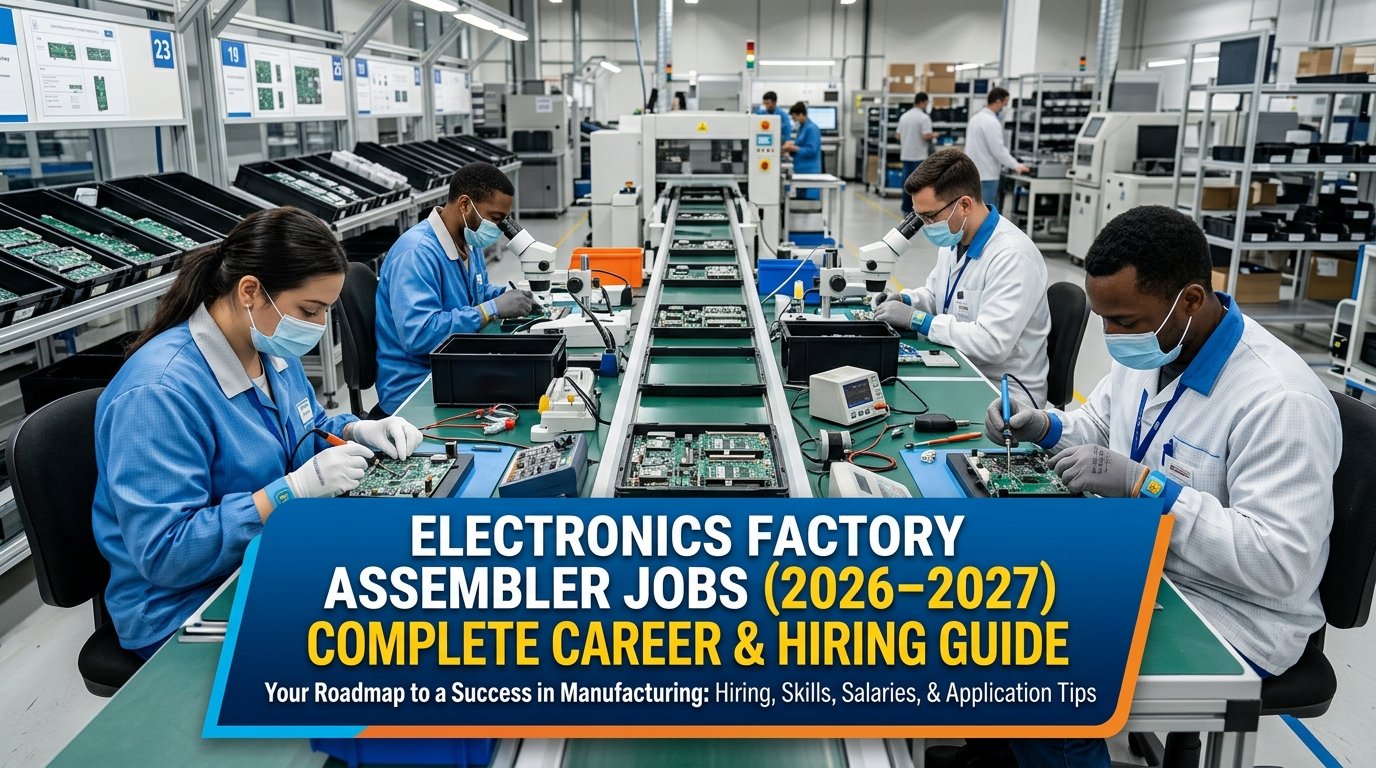
The global manufacturing and electronics sector is expanding rapidly, creating high demand for Electronics Factory Assemblers for the 2026–2027 hiring period. Whether you are seeking your first entry-level role in production or looking to advance your career as a skilled assembly technician, factory positions offer steady employment, reliable wages, and clear pathways for career growth.
This guide provides a comprehensive breakdown of what an electronics assembler does, key job requirements, expected skills, standard compensation, and step-by-step instructions on how to submit your application today.
What Does an Electronics Factory Assembler Do?
An Electronics Assembler is responsible for building, wiring, testing, and packaging a wide variety of electronic products and sub-assemblies. These products range from everyday consumer items (like smartphones and household appliances) to complex circuit boards, medical hardware, and automotive electronics.
Core Job Responsibilities
- Reading Schematics & Work Instructions: Interpreting blueprints, engineering diagrams, and assembly order guides to ensure components are placed correctly.
- Component Mounting & Soldering: Securing micro-chips, capacitors, resistors, and wiring harnesses onto printed circuit boards (PCBs) using hand tools or automated soldering stations.
- Quality Control & Testing: Performing visual checks and utilizing digital multimeters to detect wiring flaws or standard defects prior to final packaging.
- Machine Operation: Operating automated assembly equipment, wire strippers, crimpers, and basic bench tools safely.
- Packaging & Documentation: Documenting serial numbers, basic test results, and packaging completed assemblies for storage or direct delivery.
Key Requirements & Qualifications
While many electronics assembly positions offer on-the-job training, most employers look for candidates who meet the following foundational criteria:
| Category | Typical Requirements |
| Education | High School Diploma, Matriculation, or equivalent technical trade certificate (DAE in Electronics/Electrical preferred for higher tier positions). |
| Physical Demands | Good hand-eye coordination, ability to stand for long periods, fine motor skills, and accurate color vision (for wire coding). |
| Technical Familiarity | Basic knowledge of electronic components, safety protocols, Electrostatic Discharge (ESD) safety, and standard bench tools. |
| Soft Skills | Strong attention to detail, team collaboration, reliability, and basic problem-solving abilities. |
Why Pursue an Assembly Role in 2026–2027?
- Job Stability: Electronics production remains essential across multiple industries worldwide.
- Career Advancement: Entry-level assemblers often step up into roles such as Quality Control (QC) Inspector, Production Supervisor, or Lead Maintenance Technician.
- Skill Development: Gain hands-on practical experience in modern industrial soldering, automation, and circuit assembly techniques.
How to Apply