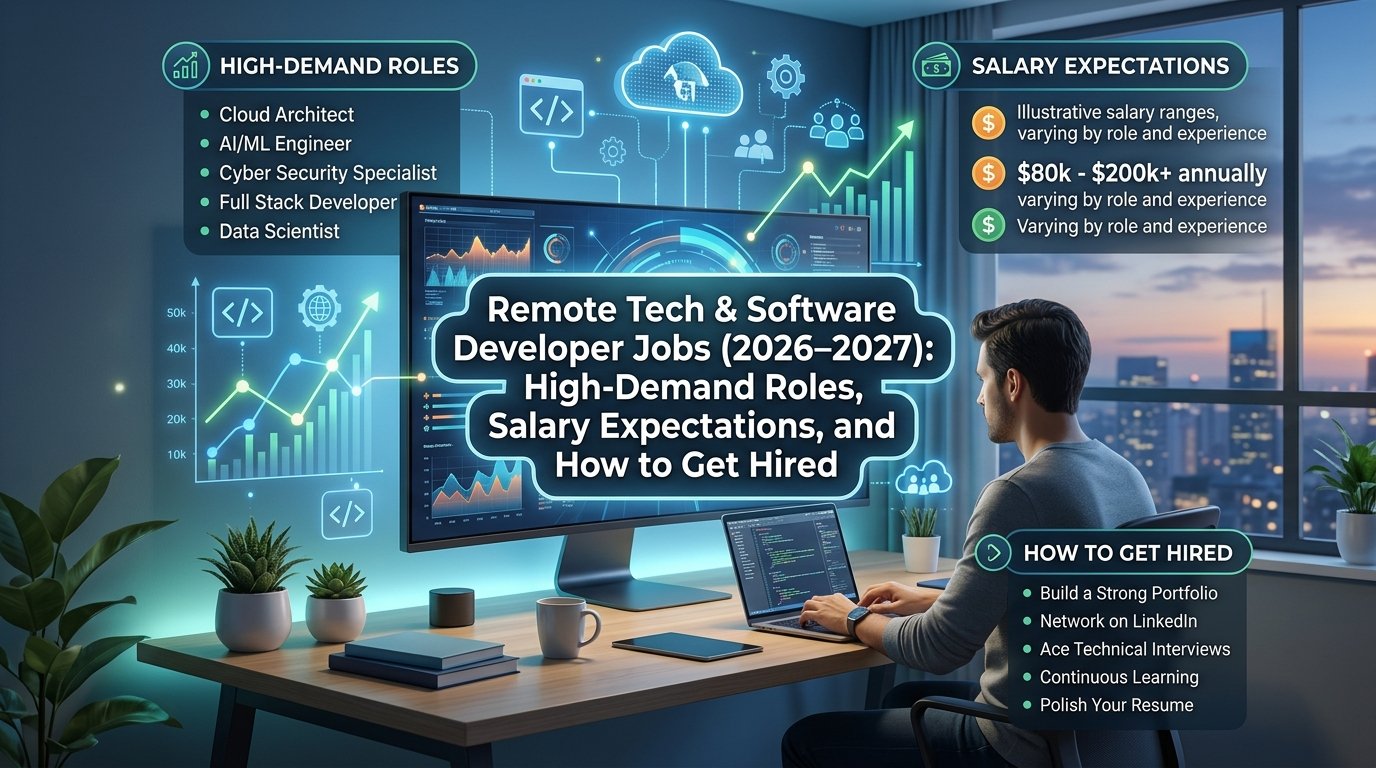
The global remote work landscape for technology professionals has matured into a permanent, highly competitive ecosystem. Moving past the initial shift toward remote environments, the hiring climate for 2026 and 2027 emphasizes specialized technical expertise, autonomous execution, and distributed team collaboration.
As mid-sized enterprises, global tech hubs, and early-stage startups continue to hire internationally, top talent can command competitive compensation regardless of geographical location. Below is an in-depth guide to the most high-demand roles, key skill sets, average salary ranges, and actionable strategies for landing a remote software engineering position over the next two years.
1. Top High-Demand Remote Tech Roles for 2026–2027
Hiring managers and technical recruiters are prioritizing candidates who can build, scale, and secure modern distributed systems. The following roles represent the highest volume of job postings across global remote job boards:
- AI & Machine Learning Engineers: Focus on integrating Large Language Models (LLMs), fine-tuning machine learning pipelines, and deploying production-grade AI applications.
- Full-Stack Developers: Highly sought after by agile startups and mid-size SaaS companies, particularly engineers proficient in modern JavaScript/TypeScript frameworks (React, Vue, Node.js) combined with robust backend services.
- Cloud & DevOps Engineers: Essential for managing multi-cloud architecture, automated CI/CD pipelines, and Infrastructure as Code (IaC) using tools like AWS, Azure, GCP, Terraform, and Kubernetes.
- Cybersecurity Engineers: Focused on threat modeling, secure code design, identity management, and cloud security architecture to protect distributed operations.
- Data Engineers & Data Architects: Responsible for building scalable real-time data pipelines, data warehouses, and analytics frameworks using SQL, Python, Snowflake, and Apache Spark.
2. Global Remote Salary Benchmarks (USD)
Salary compensation for remote developer roles varies based on candidate experience, company size, and regional hiring strategies.
| Role Level | US-Based Companies (Global Remote) | European Companies | Startups & Mid-Market |
| Junior (0–2 yrs) | $40,000 – $70,000 | $35,000 – $60,000 | $30,000 – $50,000 |
| Mid-Level (2–5 yrs) | $60,000 – $100,000 | $50,000 – $80,000 | $45,000 – $75,000 |
| Senior (5+ yrs) | $90,000 – $150,000+ | $70,000 – $120,000 | $60,000 – $100,000 |
Note: Roles requiring niche expertise in AI deployment or enterprise cybersecurity often sit in the upper 75th percentile of these ranges.
3. Key Technical & Non-Technical Skills Hiring Managers Look For
To stand out in a global applicant pool, candidates must demonstrate both core domain competencies and strong remote-first work habits:
- Async Communication: Exceptional written technical documentation, clear pull request descriptions, and proactive progress tracking via tools like Slack, Jira, or Linear.
- Self-Directed Execution: Demonstrable ability to troubleshoot dev environments, debug complex issues, and push production-ready code without heavy oversight.
- Modern Toolchain Mastery: Hands-on experience with version control (Git/GitHub), containerization (Docker), automated testing, and secure coding practices (OWASP standards).
- AI-Assisted Development: Proficiency in utilizing AI coding tools and LLM integrations responsibly to accelerate workflow efficiency.
4. How to Apply and Secure Remote Software Roles